Therapist-managed.
Return-to-work obsessed.
It's Our REHAB That WORKS — industrial rehab leaders who know workers’ compensation and case management.
Founded by a therapist, in 1990
REHAB AT WORK was founded in 1990 by Julie Milanick Howar, a practicing occupational therapist. That origin isn't decoration — it set the standard the company still runs on: the people who decide how care is delivered are the people who deliver it.
It grew around a simple observation: an injured worker's goal is not "range of motion." It's Monday morning. Everything about how we operate — the programs, the evaluations, the reporting, even the layout of our gyms with their work-simulation areas — is organized around that finish line.
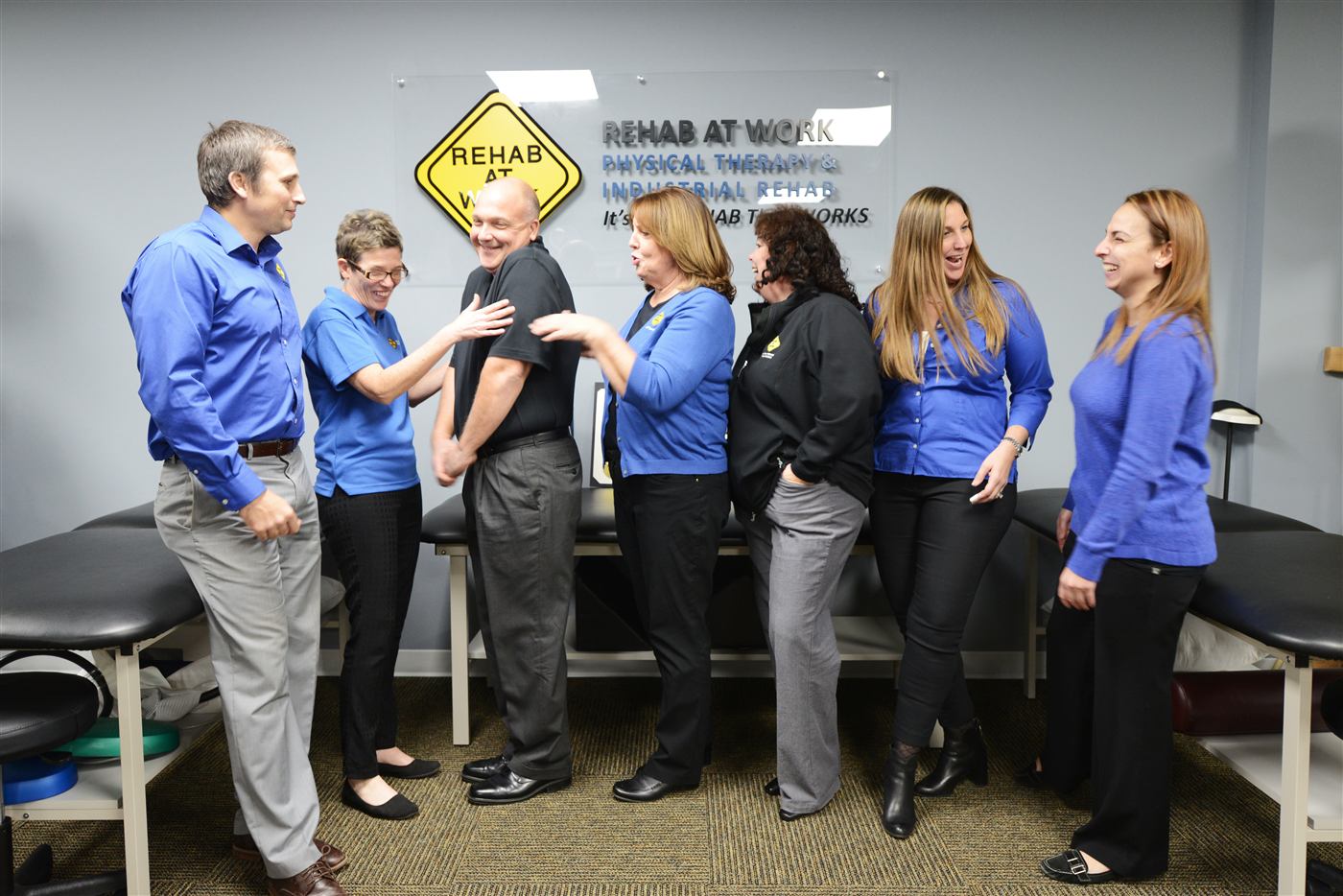
We are therapist-managed: the people making clinical and operational decisions are clinicians who still treat. Care is delivered one on one — a therapist and a patient, not a rotation of techs — because that's what moves a case.
And we're honest about what "success" means in workers' compensation. Sometimes it's full duty on Monday. Sometimes the goal is settlement or case closure — and what's needed is objective, defensible documentation of what the worker can and cannot do. We serve both, without confusing them.
Our functional capacity evaluation was built in-house and has been refined over 30 years of daily clinical use. It's one reason referrers treat us as the region's FCE providers of record.
Today we operate 10 clinics across Maryland and Virginia, serving the Washington DC metro, with bilingual services at every location.
Work is part of the recovery
One research finding shaped how we see this work. The landmark UK evidence review on work and health — Waddell & Burton, Is Work Good for Your Health and Well-Being? (2006) — found that being out of work is associated with higher mortality and worse physical and mental health. Long absence doesn't just pause a career. It erodes the person.
That's why "Back to Work, Back to Life" isn't a slogan in our buildings. The job is not the reward waiting at the end of recovery. The job is part of the recovery — and every program we run is built on that premise. The evidence, for referrers →
Clinical leadership
Crysonna Prebble, PT — Chief Clinical Director. Clinical standards, program design and quality across all 10 clinics.
See the difference in a report, not a brochure.
Refer a case and judge us on the documentation.